Words to live by...
"How beautiful it is to do nothing, and to rest afterward."
[Spanish Proverb]
(The right to looseness has been officially given)
"Everyone carries a part of society on his shoulders," wrote Ludwig von Mises, "no one is relieved of his share of responsibility by others. And no one can find a safe way for himself if society is sweeping towards destruction. Therefore everyone, in his own interest, must thrust himself vigorously into the intellectual battle."
Apparently, the crossword puzzle that disappeared from the blog, came back.
My first visits to the dentist were when I was too young to resist. I blame Dr. Wexler for my later drug use. That Nitrous Oxide was just too much fun. After a couple of visits I actually began looking forward to them. I could put up with the drilling and the pain, just give me a few whiffs and life was beautiful. Besides, I always got a lollipop on the way out.
But after my family moved to Florida, things changed. The dentists in Dade County used Novocaine shots. That was too much for me. I didn't like shots at all. I was 15 when I went to the dentist because of a toothache. One of the fillings put in by Dr. Wexler had fallen out and I had ignored it... for many, many months. But I can't ignore the pain for long once the nerve was exposed. I put up with it for one day before I let my mother know. But, oddly, the day before the appointment the pain disappeared. I no longer wanted to go. Mother made me go anyway.
I was led into the inner chamber and placed in the chair. The assistant/nurse/whatever put the paper bib on me and left. The dentist came in, did the usual "open... wider... wi-i-i-i-der... uh huh ah uh oh" stuff and then put together the needle and syringe, and began giving me shots. 4 of them. In my gums. Ow.
After the shots, he left the room. He came back in after maybe 5 minutes and asked me if I was numb yet. I wasn't so I said no, that I just had some tingling in my lower lip is all. He gave me 3 more shots and left again. He came back, refused to believe I was not numb yet (I still wasn't) and proceeded to put the pliers to the tooth. I yelled. Very loud. Very, very loud. He backed off. Decided he would give me 2 more shots. After those shots, he left for another 5 minutes. When he came back, he went right to the tooth and pushed it down then twisted then pulled up and out it came. He jammed in the pads of gauze onto the hole where a tooth once lived and the assistant/nurse/whatever led me back to the waiting room.
As we got back into the car to go home, my mother asked me why I yelled. She said it sounded loud even out in the waiting room. She said a few people left right after that. I have always wondered if she was just tugging my chain.
We all see things a little differently. And that includes food. I have evolved from a very picky eater as a child into a not-so-picky eater as an adult.
I think most children are picky eaters. Few kids jump right on spinach or lima beans as snack food or treats. At least I never knew any. Desserts were high on preference scales followed by meat and potatoes (burgers and French Fries, primarily, with hot dogs and potato chips right behind). And I was as picky as could be. I ate no mayonnaise (which, in my house, was Miracle Whip Salad Dressing and "butter" was the cheapest margarine that could be found), my veggies could not touch anything else (including each other) on my plate, didn't think much of gravy, and ordered "plain bologna sandwiches" when we would go to a restaurant. Of course, I would always ask to have the crust cut off the bread also. I very rarely drank milk. The restaurants we ate at (on the very rare instances that we went out to eat), by the way, were more properly called roadside diners and strongly resembled railroad dining cars.
Looking back, I don't know how I managed to be picky. My mother, bless her heart, was a terrible cook. We ate things like "hockey puck" burgers, crispy pork chops and very lumpy (from scratch) or soupy (from a box) mashed potatoes, spaghetti sauce made from tomato paste and water, and Velveeta was our cheese. Veggies were always out of a can or frozen, never fresh and were a bit mushy. Fish was Mrs Paul's Fish Sticks (also a bit mushy) on the rare occasion that we got them. I added salt to everything... except cereal... to which I added sugar...even to Frosted Flakes. But everything cooked by my mother was well done to burnt... mostly the latter.
Let me tell you about those burgers and pork chops. Mom had a cast iron skillet. Maybe two or three. She would melt a heaping tablespoon of lard (Crisco) in it, throw 3" wide ground chuck patties (made by hand... I pounded to 1/2" flat) into it and cook them until they were blackened and hard as the table top. When she tossed one on your plate, it would skitter across it. It was also, at that point, only about 2-1/2" wide. An un-smooth hockey puck. The very thin pork chops were also cooked to a dark brown and crispy texture in that same skillet, also skittered across the plate, and were known to break loose baby teeth.
I thought this was normal. That restaurants undercooked everything. That vegetables were blah. Needless to say, I was not brought up to be a gourmand. And this, along with genetics, might explain why I weighed 133 lbs at 5'11' when I was 19.
When I went to Boot Camp in 1965 at age 19, this began to change. My early experiences with food worked, along with the constant exercise and marching, to make Navy food seem wonderful. I gulped down two glasses (actually 10 ounce cups) of milk at each meal, ate everything they gave me, and perhaps more. It may have been because there was never anything more exotic than lima beans on the trays. It may have been because nothing was seasoned beyond the use of salt by the cooks. You can say what you want about military food but the Navy food was excellent in my opinion. Even if everything, including fried chicken, seemed to taste like roast beef.
Today I eat my steaks medium to medium rare, pork chops are thick and juicy, vegetables (while still mostly the frozen) are cooked to less than mushy, burgers are nowhere near crispy, fish is broiled or grilled and never from Mrs Paul (or Groton) - though I admit to liking Capt D's- and I will try most anything on a menu. And, though I never add salt or pepper to restaurant meals, I like spiced up food. Not hot, mind you, but well seasoned.
I still won't eat liver. Or onions. Especially together.
I came across an article yesterday that was a report on a study that said that men with index fingers longer than their ring fingers have a reduced risk of prostate cancer.
Rightly or wrongly (there is some criticism of the study), I found it interesting. Primarily because I have a prostate, I suppose. Therefore, I am drawn to things on the subject. Since my wife had breast cancer, I am also drawn to stories, studies, and reports on that. I do not believe in the concept of "idle curiosity", I think there are always motives behind it.
But I digress.
This study raised a question in my mind... What triggered the study? Think about it, why fingers? What was in the mind of the researcher who conjured up the relationship of finger size ratios to a disease we do not yet fully understand? It makes me wonder about the scientific process and if it is in good hands.
The study reminded me of something called Phrenology. A Phrenologist was a real head doctor, not a psychiatrist. He would feel the head of his patient and determine (by the bumps and their placement) to determine personality traits. This has fallen out of favor though I see vestiges of it in our general attitude toward head shape. Don't ask me to elaborate on this last statement. It would take way too many words to explain and I would just end up looking (more) foolish,
What next? Bring back leeches as medical treatment? Oh wait, that already happened back in the 80's...
Maggots and leeches make a comeback
I was perusing the news via Google and came across this article from the UK's Daily Mail..
How to tame the monsters in your mind
 "In his new book Change Your Brain, Change Your Body, Dr Amen identifies the infuriatingly common scourge: the ANT (Automatic Negative Thought), which he describes as ‘the little voices that pop into your head and tell you you’re not good enough, not thin enough, a rubbish daughter, mother, worker’.
A few ANTS, he says, can be managed."
Didn't the Dianetics folks think of this first? Engrams, I think they called them.
I once visited a Dianetics center. I was intrigued enough to read a little bit of L. Ron Hubbards' book and take some kind of survey thing and then drop by a center. This was in San Diego sometime around 1977, I believe. I was less than impressed. As they seemed to be with me.
I am sure I didn't quite understand it all. I suppose I was not expected to. In fact, I suspect I was not supposed to understand so they could then "guide" me to clarity and understanding. Something which would have cost me money, fostered my dependence on Scientology, and generally made me into someone I wasn't.
I politely turned them down. I think it was politely, I don't recall being escorted out of there by security.
The premise of ANTs is similar to those engrams. Negative thoughts which we can learn to control, to suppress. Of course, that suppression can get out of hand, can't it? How do we know which thoughts to suppress and which to let out and examine in a positive manner?
As we grow up, our experiences "program" our brains. How we interact with people and how we perceive that interaction form the "program" which controls future human interactions. Think of an infant as a new computer, fresh out of the box (so to speak). It has only its basic operating system. You will give it a name, you will "teach" it many things. Each person the child meets and interacts with will enhance its programming by expanding, or restricting, its operating parameters.
When "bad" things happen as a result of our interaction, we learn to avoid similar interactions. For instance, we become more shy when those we are exposed to treat us poorly or seem threatening. I say "more shy" because I believe we are all (generally) born shy. A defense mechanism, you might say, tied into the instinct for survival. We learn to overcome that shyness in order to function in society. It's all part of socialization.
When "good" things happen, we tend to repeat or seek out similar interactions.
But things don't always go well in our programming. "Bugs" are introduced. And "flaws" in our basic mechanism interfere. We develop certain reactions to interaction events. These "bugs" can impede all future interactions. They can impede our chances of success in life, they can hurt our chances of having a stable relationship, they can literally drive us crazy.
Scientology claims they can eliminate the engrams (or, perhaps, reduce their impact on our psyches) so we can have fulfilling lives. I actually think the basic concept is not a bad one. I just don't think Scientology really knows what they are doing. But I do think those involved in it believe in it.
I have not read the book that the Daily Mail mentions. And I probably won't. It is a self help book and I have felt beyond help for many, many years. Still, I think it might be useful to many people. These things have been around for many years ("The Power of Positive Thinking", "How to Win Friends and Influence People", "I'm OK, You're OK", etc) and are the poor man's means of self-analysis. I have always been a poor man and full of angst and neuroses so I have gravitated toward these all along. I do not actually read them, though.
I am afraid they will work.
There are phrases I love and phrases I hate. Among those I love are:
- "Tit for tat" - Gave me many a giggle as a young lad.
- "In for a penny, in for a pound" - A phrase that is clear even if you do not know what a pound is. Still, for a few years, I thought it was strictly a weight.
- "A picture is worth a thousand words" - Especially if the subject is female and nude.
- "All things must pass" - Scary... when you are talking about kidney stones.
- "Better late than never" - One of my credos.
- "Beware the Law of Unintended Consequences" - Something lawmakers do not adhere to.
Some that never made sense...
- "A wink is as good as a nod to a blind horse" - I just can't figure the value of a blind horse.
- "A watched pot never boils - I have proved this wrong many times. An unwatched pot, however, boils out the Teflon or at least burns/boils off whatever was in it.
- "Catch as catch can" and "Handsome is as handsome does" - These make no sense at all to me but my mother used to say them all the time.
- "Fell like a ton of bricks" - All objects fall at the same rate barring wind resistance. I think Galileo proved that. Or maybe Newton.
- "A penny saved is a penny earned" - Only if you get 100% interest.
I like to mix metaphors myself...
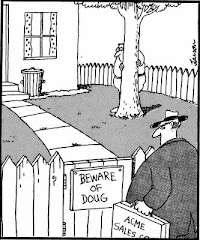
"A watched pot never nods to a blind horse"
The one phrase I truly hate is...
"Have a nice day"
I don't know why. It seems pleasant enough and innocuous enough. But it is so often offered insincerely, sometimes sarcastically. I never know just how to take it.
I hope you all had a pleasant, even merry, Christmas. I had my usual. Except we had a huge ham for dinner. Along with green beans (I love green beans) and Julienne Potatoes that were extra cheesy because Frances had used the potatoes from one box a few days ago and we used the extra cheese packet for this meal. We now have enough leftover ham to provide ham sandwiches for the next 3 weeks or so.
Even though we do not exchange presents most years, we often just buy little extra things for ourselves. We always know just what we want or need, why risk someone else figuring it out? So, this year I got a new golf GPS thingy. And a putter I am still trying to train. I didn't need a new putter but the bargain was too good to pass up. Faye still hasn't decided what she wants yet. I am assuming it will be expensive. Maybe a week in Las Vegas in the Spring. I am hearing hints of this. Hints in this house mean plans or reality.
There is a reason we do not exchange presents. Several of them, actually, but the main one is we give or buy the things we want all year long. Christmas (the gift giving part anyway) is pretty much year round. Similar with birthdays. Sometimes those gifts are given months in advance. I mean, why wait for that special day when any day is, or can be, special? And these are just "things." They are not what is important when you get right down to it.
I am very fortunate that Faye sees this the way I do. Truly an ongoing special gift.


 "In his new book Change Your Brain, Change Your Body, Dr Amen identifies the infuriatingly common scourge: the ANT (Automatic Negative Thought), which he describes as ‘the little voices that pop into your head and tell you you’re not good enough, not thin enough, a rubbish daughter, mother, worker’.